
Fertility Education.
See the science. Feel the difference.
Fertility awareness-based methods (FABMS) are scientifically validated methods that give insight to the underlying hormone environments that drive menstruation. These are powerful insights into your health and help elucidate root causes of disease. Examples of popular FABMs are the Creighton Model, FEMM, NeoFertility, Marquette, Billings, and Symptothermal methods.
Health maintenance.
The menstrual cycle is truly the 5th vital sign, and FABMs give insight into a woman’s overall health. Abnormalities discovered while charting can lead to early medical intervention to ensure you stay as healthy as possible.
Family Planning.
FABMs are extremely efficacious in allowing couples to responsibly family plan while cooperating with God’s creation. By tracking ovulation and timing intercourse, FABMs are powerful tools to achieve and postpone conception.
Fertility Treatment.
You are unique, and so should your fertility treatment. FABMs allow timed hormone assessments, fertility interventions, and evaluate treatment efficacy. Without FABMs, you are driving blind.
FEMM
Fertility Education and Medical Management
FEMM is an internationally renown menstrual charting protocol guided by the Reproductive Health Research Institute, a research organization engaging in groundbreaking discovery of biologic processes related to menstruation and fertility. The FEMM protocol is useful in tracking menstruation for health maintenance, medical treatment, and family planning purposes. You can visit their website to learn more about the charting system and how it works - femmhealth.org.
All Evangeline fertility educators are certified FEMM Educators having done a formal coursework, a training practicum, and certification exam. They are certified to teach FEMM in all 50 states.
Frequently Asked Questions
How much does fertility education at Evangeline cost?
1
Individual and couples fertility education costs the same, $100 per hour for the first 3 sessions. After that, sessions are prorated based on time and need. Ongoing check-in sessions may be more appropriately timed at 15 minutes to 30 minutes depending on need. Please visit our fertility education pricing page for additional information.
Does insurance cover fertility education?
2
Fertility education is legally required to be covered under the Affordable Care Act as a pre-deductible service. Through MyCatholicDoctor’s billing department, we will make every effort for you to maximize your insurance benefits. However, we often encounter insurance companies who make this process difficult. If we are unable to get the sessions approved with insurance, the cost will default to the standard cash price.
Do I have to see medical management if we are just doing fertility education for family planning?
3
If you want to use your insurance to pay for your education sessions, then you will need to see Trey for a very brief informal initial visit. This type of visit is typically only 15 minutes. The purpose for this is to establish a patient relationship with Trey, of whom’s insurance credentialing we use to submit the claims for your fertility education under. If you are wanting to just pay cash, then no medical visit is needed.
How do we schedule fertility education appointments?
4
You may schedule fertility education appointments by visiting our scheduling page. If you do not see an appointment that fits your schedule, please message us and we will work with you to find a time that works for you!
Patient Experience
FEMM fertility education is delivered across 3 main sessions with continued coaching and follow up as needed. (Descriptions taken from FEMM Materials)
Session 1: Introduction to the FEMM Charting System
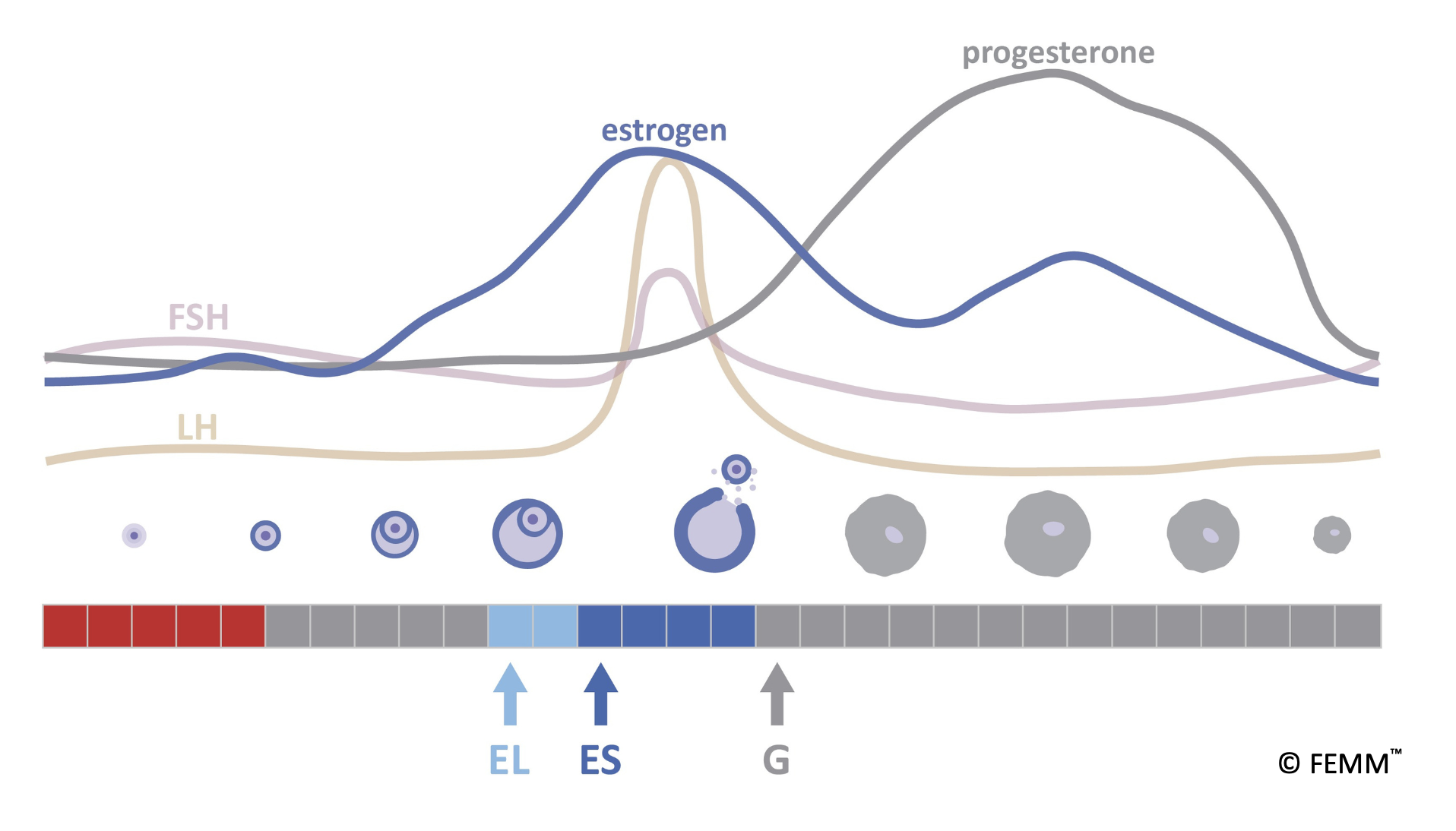
Participants learn the parts and function of reproductive anatomy, and the physiology of ovulation - understanding the critical role of hormones in the cycle. Hormones from the brain and ovaries affect the health of the reproductive organs and the entire body. Observable biomarkers allow women to identify hormonal changes, key cycle events such as ovulation and other indicators of health and fertility.
Participants are taught the method of FEMM charting through observing and recording these biomarkers. The session concludes with charting exercises.
Session 2: Expert Use of FEMM Charting System
Participants learn to understand the cycle—both its biomarkers and the underlying hormonal activity—as an indicator of their overall health. They are taught the phases of the cycle with an emphasis on the time of ovulation, the dominant hormonal activity in each phase, and what biomarker observations within each phase are necessary for a woman to be considered healthy.
Attention is given to the understanding of the cycle as a holistic fertile process, which is fundamental to understanding cycle variations. The session includes analysis of various cycle types, including those of health concern. Exercises, Q&A, and case studies accompany this session.
Session 3: Family Planning with the FEMM Charting System
In this session, participants are taught the principles of FEMM Family Planning. The session includes a review of male and female reproductive physiology, the dominant reproductive hormones, and the key stages in and differences between male and female fertility throughout reproductive life. With regard to family planning, the key event in a woman’s cycle is ovulation, and so participants learn to relate cycle biomarkers to ovulation and a woman’s fertility.
Primary biomarkers are estrogenic cervical fluid and the surge of the luteinizing hormone (LH) just prior to ovulation. Participants apply this knowledge to identifying ovulation and fertility in variable cycle types. Exercises, Q&A, and case studies accompany this session.
Session Information
Over the course of your sessions with an Evangeline fertility educator, you will have access to an abundance of patient materials, direct access to medical management if necessary, and maintain an open line of communication with your fertility educator. The sessions are conducted via MyCatholicDoctor’s tele-health platform or may be in-person in special circumstances.
Follow-up Fertility Education Visits
Your follow-up visits will entail reviewing your charted observations, coaching on how to more accurately or proficiently record your observations, evaluating your experiences and concerns regarding your proficiency, and discussing opportunities for improvement.